


Shop Essentials


Professor Dick Vethaak
Discoverer of Microplastics in Human Blood
Made with Nature,
Not Plastic
At Aya, we make clothing from natural fibers, without synthetic fibers.
Our garments are made from organic Pima cotton and alpaca wool, sewn with cotton threads.
Our clothing is timeless and versatile: soft yet durable, elegant yet functional. Our fabrics contain no polyester, nylon or elastane, and we do not use PFAS finishes.
Clothing for the next generation.
This is what
Clothing Without Synthetic Fibers
looks like...
Our fabrics, threads, labels and elastic bands are made without synthetic fibers.
Some of the dyes and softeners we use are still petrochemical-based, and we tell you which ones.
Our Exclusive Collections
Our Exclusive Collections


Pima Cotton grows the longest & finest cotton fibers in the world. A species native to Peru, its modern variant was selectively bred across the world to achieve its luxurious softness.
Our Alpaca fabric is knit from the finest Alpaca fibers, 19 microns, softer than Baby Alpaca. These rare fibers are hand-sheared annually by andean communities & essential for the health of the free-ranging Alpacas.
We use plant-based dyes and cochineal rooted in ancestral techniques. These pigments contain no synthetic colorants.
Each EcoPrint garment is unique. Leaves and flowers are imprinted directly on the fabric, creating patterns that will never repeat. Nature becomes the designer.
Although difficult due to Alpaca's smooth & flat scales, Alpaca felts create a unique and durable fabric. We use leftover alpaca fabric in our artisanal felts.
Our fabrics contain no polyester, nylon or elastane, so they do not shed plastic microfibers.
Every garment comes only from nature. No polyester, no nylon, no acrylic, no elastane, no blends.
We tell you what we still use, such as reactive dyes and silicone softeners.
Our Mission
Step 1: 100% Plastic Free
“Microfibers are the predominant type of plastic that we find in the environment”
-Abby Barrows, Microplastics Research Scientist
We have completed our first step. We have successfully removed all plastics from all of our products:
- All plastics from our fabrics, like polyester blends and especially elastane.
- All nylon and other synthetics from our buttons, labels, threads, elastic bands, zippers.
- All polyurethane varnishes and lacquer from our metals zippers and wood household items.
Step 2: Petrochemicals We Still Use
We still use some petrochemicals:
- Petrochemical dyes in our fabrics
- Petroleum-derived surfactants in the silicone softeners of our fabrics
- Petrochemical dyes in our threads and cotton elastic bands
- Petroleum-based dye ink on our clothing labels and bag labels
- Petroleum-based bioplastics in our packaging
We do not add to our fabric:
Anti fungal, anti-static, flame-retardants, formaldehyde, or other fabric finishing petrochemicals.
We currently still use low-impact reactive fabric dyes and silicones (fabric softeners). This is all we add to our fabric, no other petrochemical is added. Reactive dyes and silicone softeners are the current industry standard, even if companies do not mention it.
Nature is made of chemicals and our natural dyes use them as well.
Some of our products use only natural dyes and no silicone softeners. These products are still a small part of our catalog.
Step 3: The Path Ahead
What we wear must be as safe as it is beautiful, as clean as it is enduring. We must design clothes that protect not only our bodies, but the planet we walk on.
Our biggest goal is to help spread this information, for all brands to take positive steps, creating a community that guides one another. There are many mistakes that we at AYA have to improve upon. To push the limits of sustainability, we will need everyone’s support.
To Join our Journey follow us on ….

Family Company
My mother’s stories of growing up in an Andean mountain village still fascinate my brother and I. As kids we saw glimpses of this world on our visits to Peru, a world with less opportunity but more connection with nature… Our father motivated us to take a deeper look at Peru, to create something unique that we could bring to the rest of the world. Creating a bridge between a modernized mindset and the disorganized, often dangerous, infrastructure of a developing country has been challenging. Underneath this chaos, we found a vast culture of textile traditions going back millennia. I am grateful for experiencing the positives and negatives of both worlds, for taking this journey with the support of my family.

Original Brand Manufacturer
A major difficulty with sustainability in fashion is that many brands only design their clothes. To create something new a brand has to coordinate with a yarn maker, then a knitting factory, and then with a cut and sew facility. All spread apart in different countries, speaking different languages, makes testing new ideas in real-time impossible. Although risky, our decision to manufacture our clothes gives us a unique opportunity to analyze details that are rarely published on websites, like the elastane hidden in “non toxic” fabric. We decided to be a part of the creation of our clothes; know that we care about every detail of what you are wearing.

Single Origin Supply Chain
When a clothing label says Made in China, what it really means is that only the sewing was done in China. The textile supply chain really begins by creating the fiber. Let’s take Polyester: Its supply chain may begin with extracting petroleum off-shore, then refining hydrocarbons in The Gulf countries, polymerizing them in China, spinning the fibers into yarn in India, knitting and sewing in Cambodia, and finally sending them to the U.S. All of our production from spinning, knitting, fabric finishing, cutting, and up to garment making is done entirely, in Peru. At the moment a few of our notions, like the button shells, are imported. We can easily take a short trip to visit communities and providers, maximizing our transparency.
Softness Perfected,
Timeless Designs
Nature’s Most Luxurious &
Softest Fibers With Zero Plastics
Softness Perfected,
Timeless Designs
Nature’s Most Luxurious &
Softest Fibers With Zero Plastics
PLASTIC-FREE ESSENTIALS


PLASTIC-FREE ESSENTIALS

Women's Tank Dress
100% Organic Pima Cotton
From €61,30

Mix 3 Pack - Women's Bralette & 2 Panties
100% Organic Pima Cotton
From €70,20

3 Pack - Men's Boxer Briefs
100% Organic Pima Cotton
From €57,00
Unbelievably Soft Organic Pima
Experience premium softness and luxurious quality of the finest, organically grown Peruvian Pima Cotton.
Pima Cotton is more resistant to tearing, pilling, and wrinkling, as the staple fiber is extra long, fine and smooth.
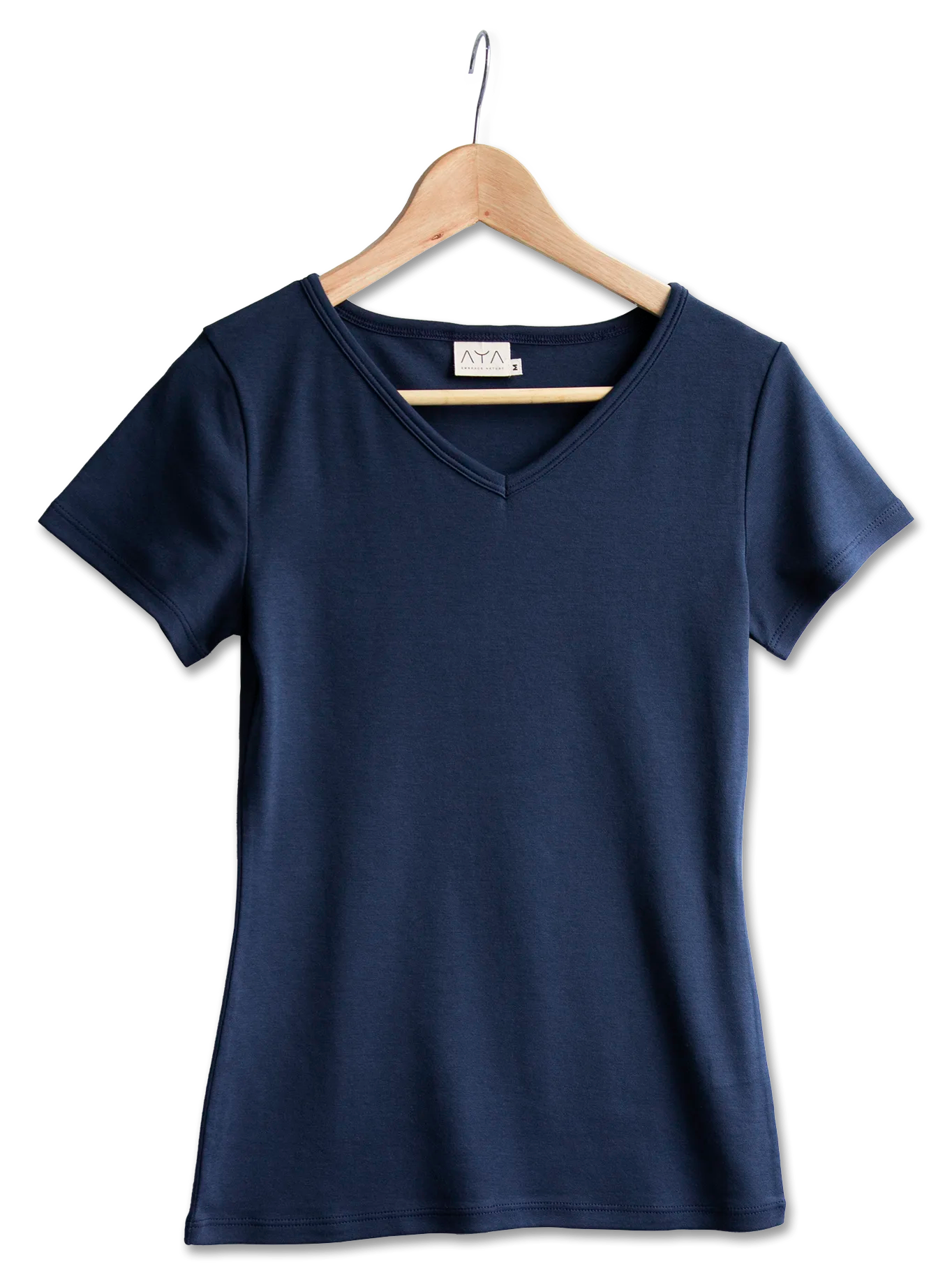
WHAT YOU WEAR MATTERS
More than 500 million microplastic fibers shed from one synthetic T-Shirt per year.
We're changing the fashion industry by making 100% plastic-free clothes:

FABRIC
100% Organic Pima

THREADS & LABELS
100% Cotton

DYES
Plant or GOTS
ELASTIC BANDS
Tree Rubber & Cotton

NATURAL WHITE
Natural raw tone of organic cotton (undyed)

NATURAL GRAY
Taupe gray extracted from Eucalyptus leaves

NATURAL BLUE
Deep blue shade from Indigofera Tinctoria
100% PLANT DYE COLLECTION


Welcome to Our Studio
We established our own production studio to ensure our products follow sustainable principles and allow for innovations and traceability.
Our goal is to teach the world about sustainability while pushing the boundaries of sustainable fashion by producing eco-friendly apparel.
Join us on our journey to creating the most sustainable clothes.
Learn MoreOUR MISSION
Greenwashing occurs when innovations are made in only one area of sustainability, while avoiding the others.
The only way to create real sustainable fashion is to make improvements in all three areas:

100% BIODEGRADABLE
INGREDIENTS

COMPLETE CIRCULARITY

CONTAMINATION-FREE
SUPPLY CHAIN
- 100% Biodegradable Ingredients
- Contamination-Free Supply Chain
- Complete Circularity